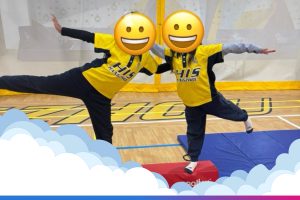
We have brought together three PSPE teachers to collaboratively teach Lower School PSPE classes. After considering research on best teaching practices, we believe this collaborative approach holds benefits that go beyond traditional teaching methods, a belief also held by. Johnson, D. W., & Johnson, R. T. (2009), who support that this innovative approach allows for better differentiation within class, while helping students develop communication skills and caring attitudes. As a Lower School PSPE department, we believe we have worked together to create a dynamic and engaging curriculum with the goal of meeting the needs of all students, whilst motivating and inspiring healthy, active lifestyles.
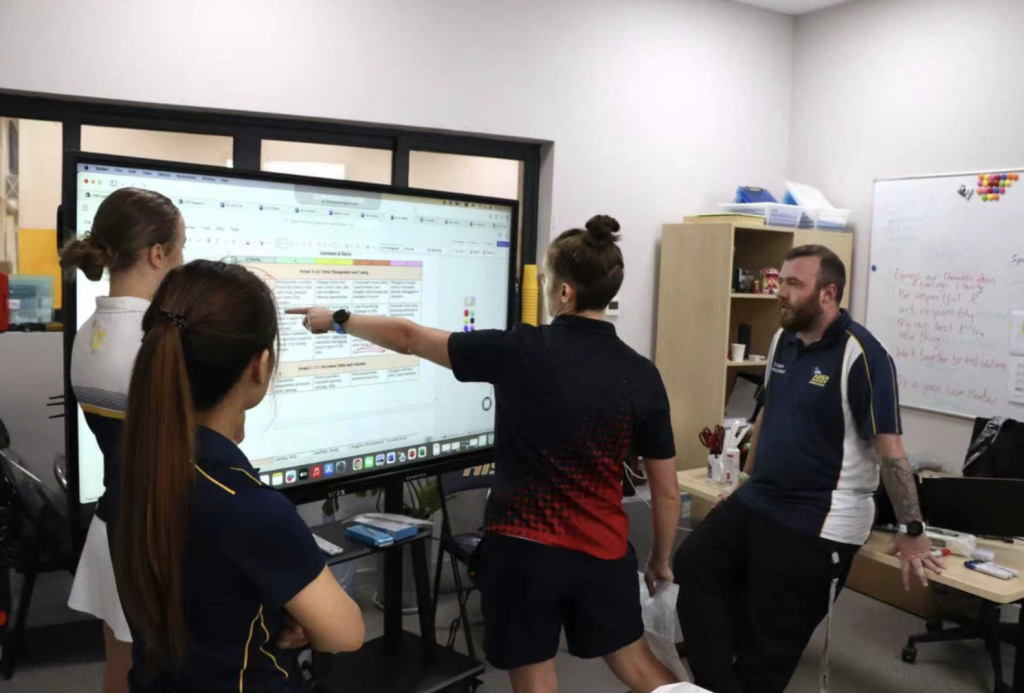
As educators, we have found that team teaching offers a unique opportunity for professional growth and development. We can learn from each other’s experiences, teaching styles, and expertise. This constant collaboration of ideas and exchange of constructive feedback has challenged us to continuously improve our teaching practice and strive for excellence. This way, we can offer students the best possible educational experience.
In addition to our professional growth, team teaching has allowed us to provide a wider range of learning experiences by increasing the number of sports and physical activities our students are educated on. Differentiation has also improved as a greater number of teachers allows for a greater choice in access to learning, whether this be through activity stations, differentiated equipment or activity design, students can still receive personalised feedback and achieve learning outcomes. We believe team teaching has led to the goal of creating the best possible learning experiences for the students.
Student Thoughts
Students shared their opinions on our new team-teaching approach to PSPE:
“I enjoy having a rotation between different PSPE teachers because I experience different types of teaching. I enjoy tournaments and playing against different classes”, Lewis 5D.
This is particularly true in Grade 5 classes, as team teaching two classes at a time has allowed us to plan a Sports Education unit which would not be possible with a single class and a single teacher.
“In PSPE class we are learning about different invasion games, like ultimate frisbee and floor hockey. Different teachers teach us different games, so we can learn about more sports and play against more teams”, Maggie 5C.
“I enjoy playing two different sports with different teachers so I can learn how to play frisbee and hockey at the same time”, Jake 5C. Jake continued to add that he hopes the collaboration time between students will continue to increase.
Finishing Thoughts
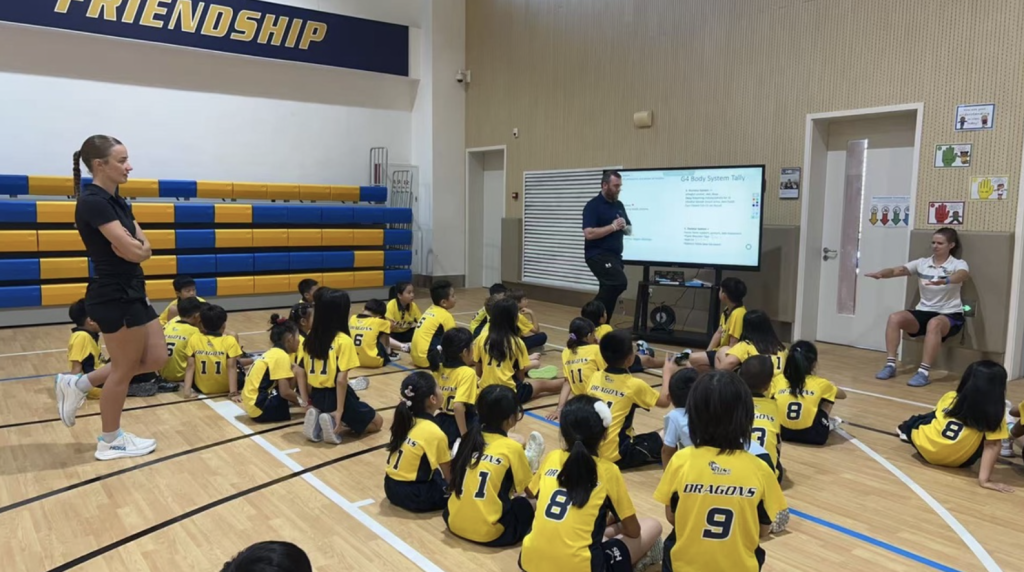
Students and teachers can agree that team teaching in PSPE is a powerful tool for building community, fostering collaboration, and enhancing the overall learning experience for students. Casey, A., & Goodyear, V. A. (2015) support that this approach not only benefits students by providing a more personalized and engaging learning experience but also empowers us, as educators, to grow both personally and professionally. Stronger together, through team teaching, we can create a brighter future for our students.
Refrances
- Johnson, D. W., & Johnson, R. T. (2009). An educational psychology success story: Social interdependence theory and cooperative learning. Educational researcher, 38(5), 365-379.
- Casey, A., & Goodyear, V. A. (2015). Can cooperative learning achieve the four learning outcomes of physical education? A review of literature. Quest, 67(1), 56-72.